Pliny writes that pitch from the northern evergreen sealed wine casks and coated Roman ships. (Natural History 16)
Latin picea is the pitch-bearing evergreen of the north in Pliny's forest books. (Natural History 16)
Gwich'in used spruce for food, shelter, fuel, and tools. (Andre and Fehr, Gwich'in Ethnobotany)
Gwich'in boiled cones and young tips for tea and kept sticky gum in jars. (Andre and Fehr, Gwich'in Ethnobotany)
Inner bark was eaten raw, boiled, or dried and ground. (Alaska Native harvest records)
Spruce resin was used as a cover on burns and sores. (Southeast Alaska Traditional Foods Guide; Gwich'in Ethnobotany)
Upper Kuskokwim people carved spoons from dead spruce root. (Upper Kuskokwim plant gathering)
Cook's navy brewed spruce beer on northern voyages as a scurvy ration. (18th-century naval practice)
Southeast Alaska harvest guides list spruce tips in tea and jelly. (SEARHC Traditional Foods Guide)
Black spruce and white spruce both go by ts'iivii in Gwich'in. (Andre and Fehr, Gwich'in Ethnobotany)
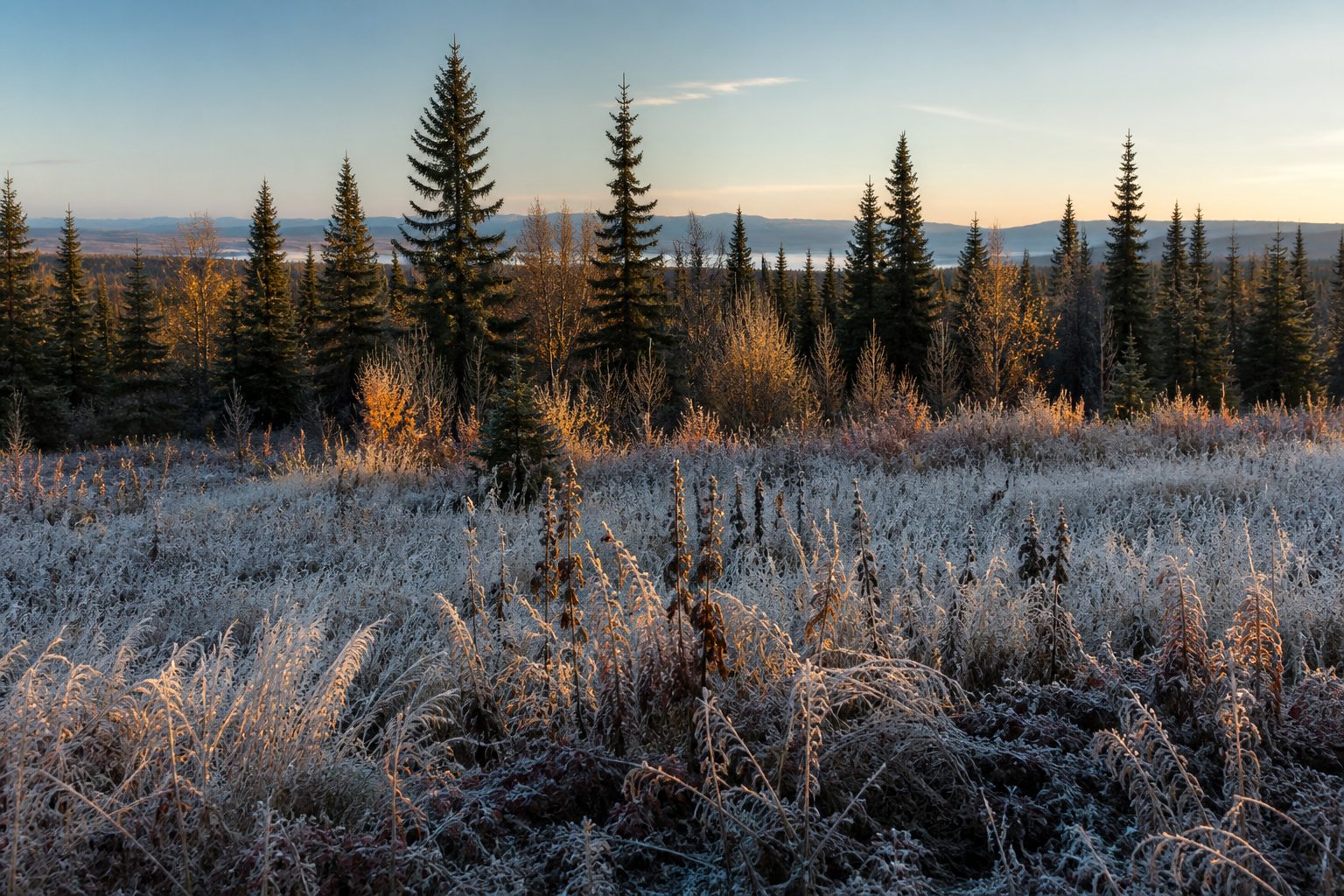
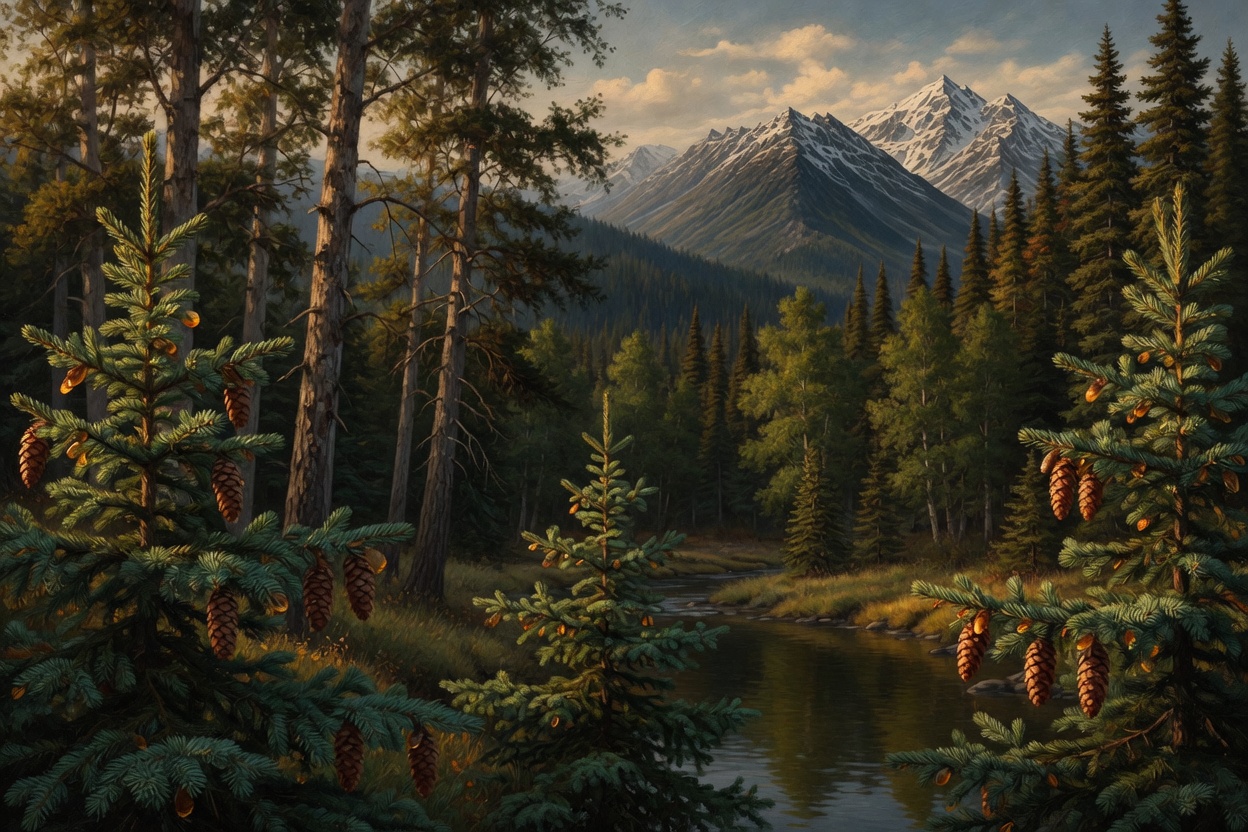
Four-sided needles and hanging cones mark white spruce in the field.
A spruce holds green needles through the dark months when the birch is bare.
Cree, Dene, and Inuit steeped the leather leaf as camp tea long before a Latin name existed for the shrub.
Hudson's Bay posts in the 1700s sold the leaf as Labrador tea when China leaf ran short.
Linnaeus placed the plant among the ledums.
USDA forest records list it as a tea and infusion across much of Alaska. (PNW-GTR-671)
Dene medicine booklets record the leaf steeped for sore throat and chest congestion. (Dene Medicine booklet)
Leaves are green on top and rust-brown underneath. Crushed, they smell loud.
It grows in bogs, peat, and wet openings near spruce.
European herbals after contact copied the northern cup rather than inventing a Mediterranean one.
Botanists now place it with the rhododendrons. (Rhododendron groenlandicum / tomentosum)
Gwich'in and other Dene peoples kept it as a winter drink.
Flowers come in white clusters at the top of the shrub.
Historical notes say to use the leaf in moderation.
Achilles and his men are said to have carried yarrow to staunch wounds on the campaign at Troy. (Greek tradition; Pliny, Natural History 25.19)
Pliny writes that Achilles, taught by Chiron, used this plant on the wound of Telephus. (Natural History 25.19)
Romans called it millefolium, thousand-leaf. (Pliny, Natural History 25.19)
Dioscorides listed yarrow among wound plants. (De Materia Medica)
Dried yarrow stalks were used in China to cast the I Ching.
Early Slavic herbals kept yarrow in the house against lice, fleas, moths, and mosquitoes.
Upper Kuskokwim people kept yarrow with nettle and wormwood in the medicine bundle. (Kari 1977)
NPS Denali lists boreal yarrow among plants used as medicine. (NPS Denali ethnobotany)
Linnaeus named the genus Achillea in 1753 after Achilles. (Species Plantarum)
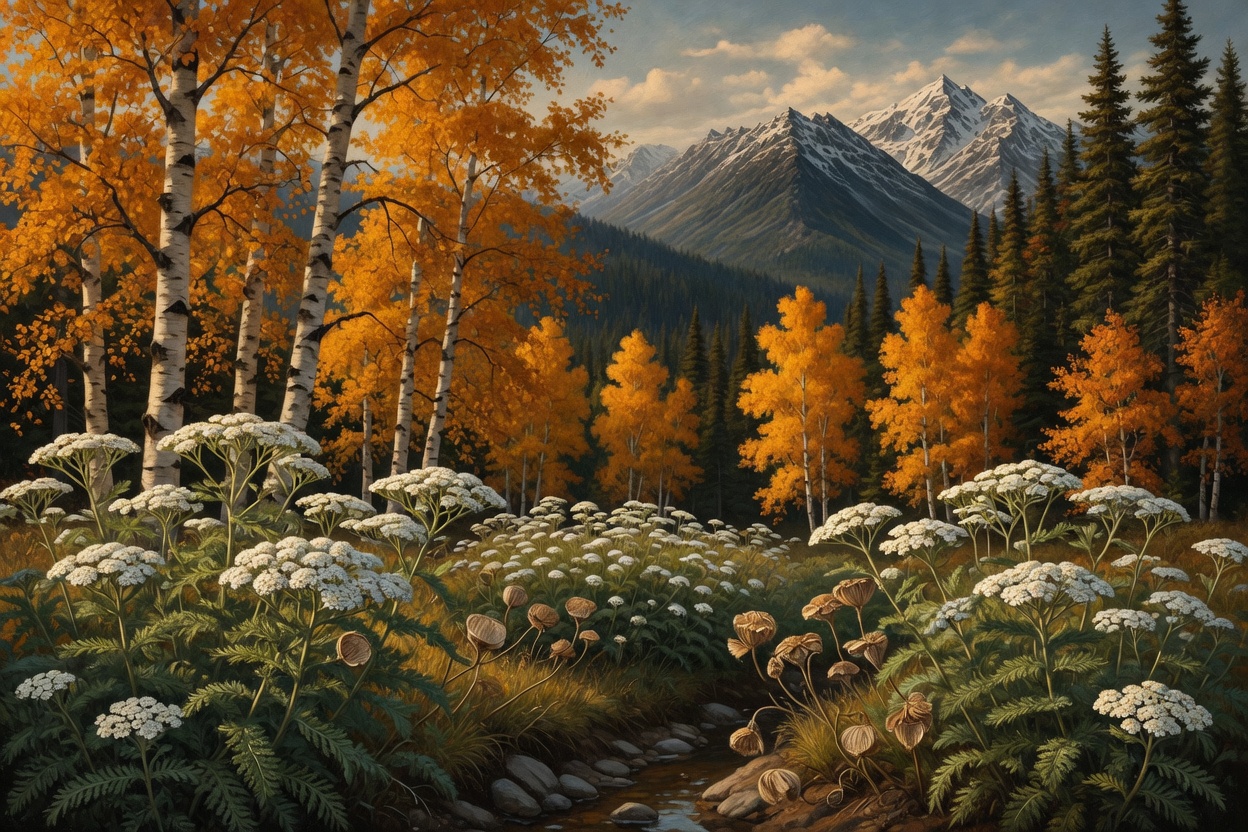
A single flat head is many tiny flowers packed together, which is why Romans said thousand-leaf.
Yarrow holds dry openings and ditches across the north of Europe, Asia, and North America.
Medieval Europe knew it as herba militaris, the soldier's woundwort.
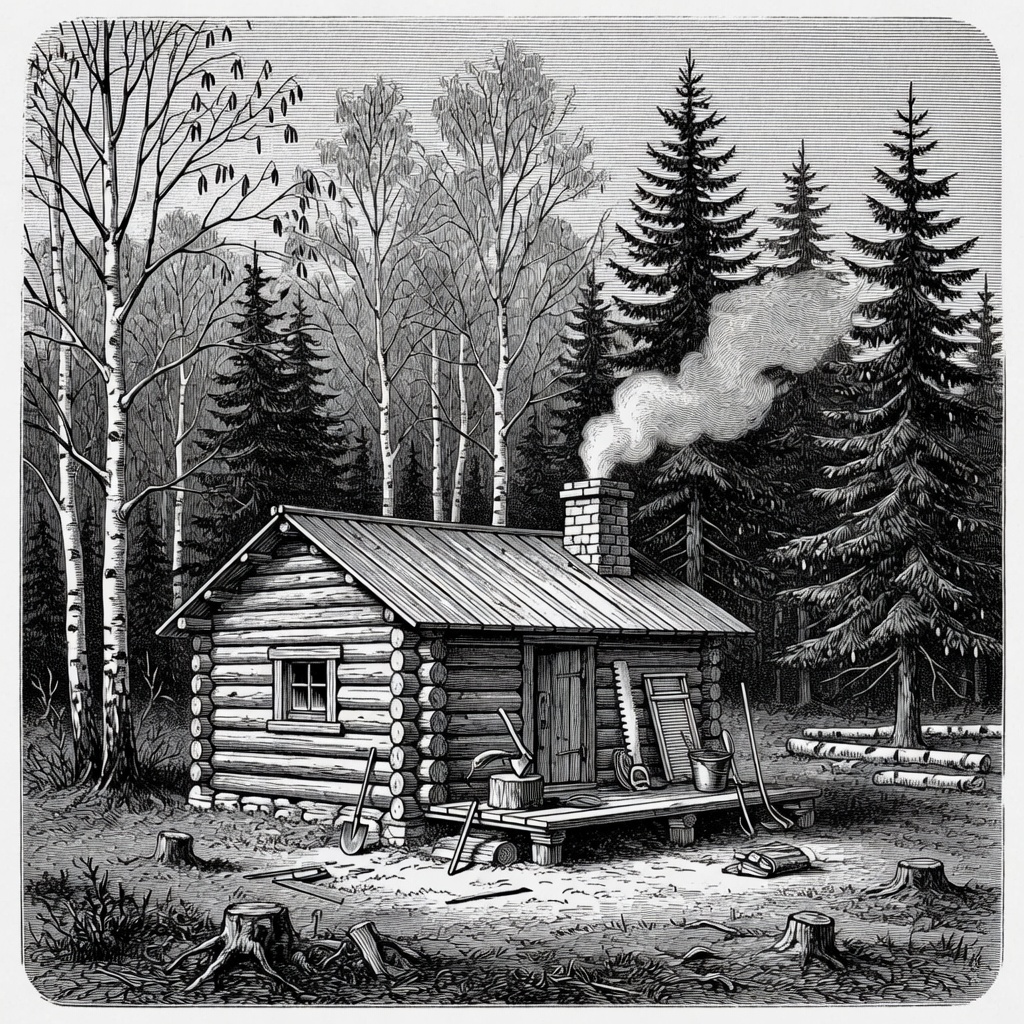
Pliny calls birch a Gallic tree used for magistrates' rods, hoops, basket ribs, and bitumen boiled from the wood. (Natural History 16.30)
Buddhist manuscripts from Gandhara, some two thousand years old, survive written on birch bark.
Scythian and later Siberian peoples wrote on birch bark.
Koyukon selected hillside birch for sleds, canoe frames, and snowshoes. (Jetté, Koyukon ethnobotany)
Bark covered canoes and made baskets for water and berries. (Athabascan records)
Inner bark was dried so fish would not slip during processing. (Koyukon ethnobotany)
Finns and Sami took spring sap and kept bark for vessels.
The white paper bark peels in sheets, which is why English speakers call it paper birch.
Spring sap runs when the frost lets go of the trunk.
Pliny says the birch is a cause of terror as the source of the magistrates' rods of office. (Natural History 16.30)
Betula papyrifera is the paper birch of the north.
Hillside birch lasts in a sled. Floodplain birch, Koyukon said, rots in a year. (Jetté)
Dioscorides listed willow among Greek army medicines. (De Materia Medica 1.104, itea)
Dioscorides packed hot willow leaves for gout. (De Materia Medica 1.104)
Pliny counts fourteen willow preparations in the Roman materia. (Natural History 24)
White willow is named as an antipyretic in that Greek-Roman line. (Dioscorides tradition)
Cree and Dene used inner bark and young wands for cordage, nets, and baskets.
USDA records list Alaska willow for edible spring leaves, dye, and rope. (PNW-GTR-671)
Southeast Alaska harvest guides note bark and roots in baths, and leafy branches in the steam bath. (SEARHC Traditional Foods Guide)
Nineteenth-century chemists isolated salicin from willow.
Catkins come on the red twigs before the leaf.
Willow holds the cutbank and the wet edge of the river.
Dioscorides describes a burned-bark vinegar rub for corns. (De Materia Medica 1.104)
A wand from a young willow bends without breaking, which is why it made nets and ties.
Greek story tied white poplar to Heracles.
Pliny kept poplar in the Roman materia. (Natural History 24)
Gwich'in used poplar for medicine, fuel, and bait. (Andre and Fehr, Gwich'in Ethnobotany)
Koyukon burned the bark as a mosquito smudge. (Nelson, Koyukon ethnobotany)
Koyukon peeled bark slabs for smokehouse floors and walls. (Nelson)
Bark was carved into fish-net floaters. (Nelson, Koyukon ethnobotany)
Pitchy buds were boiled with grease as a salve for sores, rashes, and frostbite. (Koyukon ethnobotany; Upper Kuskokwim plant gathering)
Later traders sold the bud as Balm of Gilead.
The tree marks breakup ground along the river.
Cotton from the seed rides the wind in midsummer.
Heart-shaped leaves rattle in a small wind.
Koyukon story says a woman who wept became the balsam poplar with its deeply cut bark. (Nelson)
Pliny writes that rose juice was used as a gargle, to bring sleep, and to settle nausea. (Natural History 21.73)
Pliny describes how to make rose wine. (Natural History 21.73)
Dioscorides kept rose (rhodon) and named dog-rose kynosbaton. (De Materia Medica)
Romans used rose oil and garlands.
Gwich'in ate the hips as food. (Andre and Fehr, Gwich'in Ethnobotany)
USDA lists Alaska rose for edible shoots and hips. (PNW-GTR-671)
Dene booklets steep petals as tea.
Hips form after the flower and wait through frost.
Rosa acicularis is the prickly rose of the north.
Pliny separates uses of petal, flower, and head. (Natural History 21.73)
Rose heads in drink were listed to check diarrhoea. (Pliny, Natural History 21.73)
A hip is the fruit left when the petals fall.
A single scentless mayweed plant can produce 10,000 to 200,000 seeds, and figures of over a million have been quoted. (Garden Organic weed datasheet)
Each flower head can hold 345 to 533 seeds. (Garden Organic)
Seeds stay able to sprout in the soil for about six to seven years. (AgroAtlas)
Crushed leaves have almost no smell, which is how it earned the name scentless. (King County, WA; RHS)
In Scandinavia it is called Baldr's brow. (Norse name Balderbrå)
Native to Eurasia, it now grows as a weed of fields and roadsides in North America, including Alaska.
Botanists moved it among Matricaria, Chrysanthemum, and Tripleurospermum.
Germination wants light. Most seedlings come from the top few millimetres of soil. (Garden Organic)
Flowers run from summer into fall: white rays around a yellow disk.
King County notes each plant can produce up to 300,000 seeds. (King County noxious weeds)
It grows in disturbed ground, ditches, and the edge of a field.
Isolated plants in Britain may set little seed because the species is self-incompatible there. (Garden Organic)