Field Notes · The garden edge · August 2026
By Aimee · 5 minYarrow at the garden edge.
Flat white heads and a ferny leaf. A field plant we dry for the winter pot and the tin.
Quick guide to
YARROW
★ in Alaska ★
Ferny leaf, flat white head, late-summer ditch. A kitchen plant.
| Fact | On this place |
|---|---|
| Latin | Achillea millefolium |
| Where it stands | Garden edge and ditch |
| How you know it | Feathery leaf, flat continent of tiny white flowers |
| When we work it | Late August, heads gone papery |
| What we take | A handful of heads from the edge, a handful from the ditch. Leave the root |
| In the shop | Teas. A small note in the tins |
| Who else uses it | Bees on the last warm days. Seed for next year |
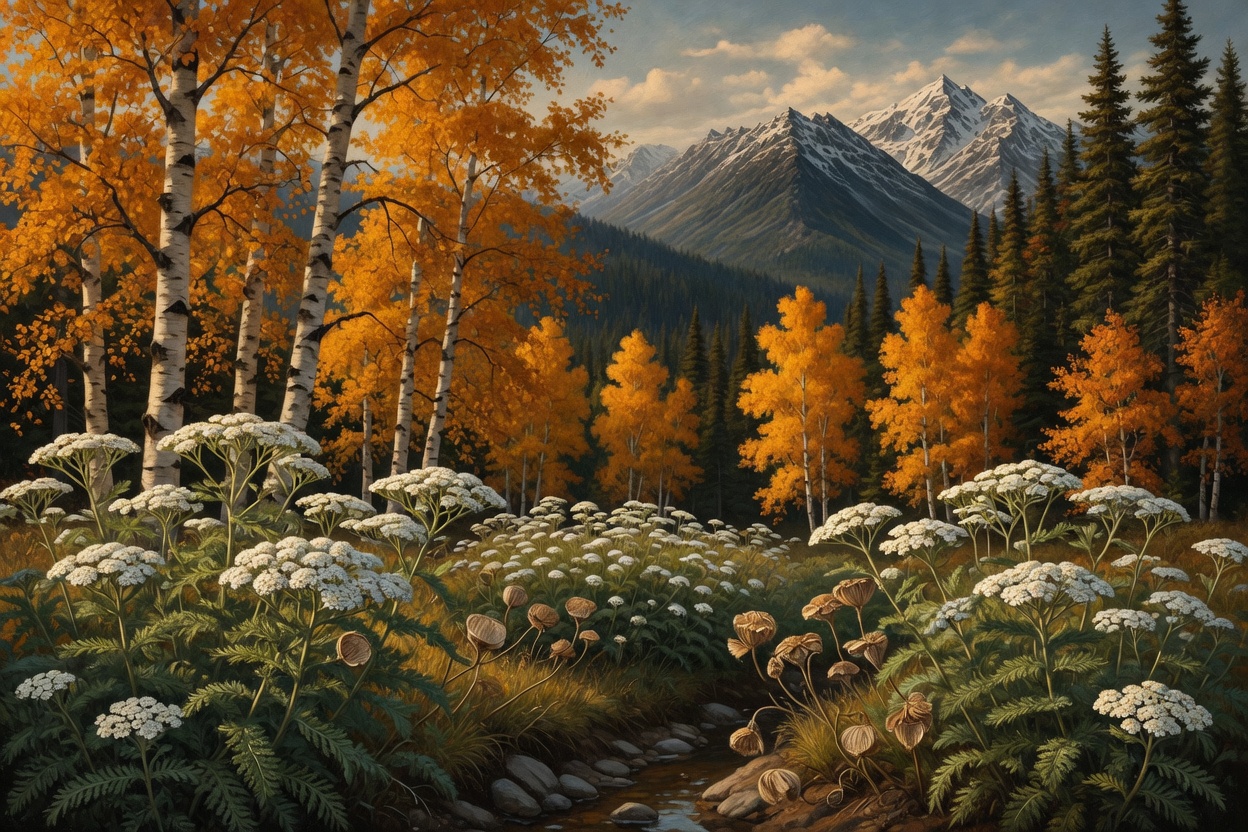
Yarrow stands at the edge of the garden and along the ditch as if it were invited. The leaf is feathery. The head is a flat continent of tiny white flowers. By late August those heads have gone papery and the smell, if you rub one, is sharp and green. We cut a few, hang them in the shed, and crumble them into the winter pot and into a jar that waits for the kettle.
Plenty of old manuals list yarrow as a kit plant.
How we take it
We cut the stem above a leaf, leave the root, and never strip a stand to the dirt. A handful of heads from the garden edge and a handful from the ditch is a year's household jar. The rest stay for the bees that are still working the last warm days, and for seed.
Dried, the head crumbles into a pale, almost dusty flower that looks like nothing until it hits hot water or warm oil. It goes into our teas. In the tins it is a small part of a larger pot. The label of each batch carries the list.
You will see yarrow named in the winter blend and in the harvest cards. That is the whole claim: we gather it, we dry it, we put it in the pot.